July 15, 2026 · Autoriax
The 2026 SEO Content Strategy: From AI Draft to Ranked Article in 3 Hours
Master the 2026 SEO content strategy: from AI draft to ranked article in 3 hours. Learn the pre-publishing quality gate, entity density, and edit ratio…

In 2026, content velocity has reached unprecedented levels, yet the gap between high-ranking and invisible content has never been wider. Traditional manual workflows cannot support the volume, specificity, and speed required to compete in a search landscape now dominated by AI-generated answers and conversational queries.[1] However, speed without substance is merely a faster path to a rankings plateau.[7] The solution is not to produce more content faster, but to implement a systematic pre-publishing quality gate that most SEO teams skip entirely.
The 3-hour timeline outlined in this guide is not a productivity hack — it is a forced constraint that eliminates perfectionism and enforces a structured review process. Winners in 2026 invert the common workflow: they use AI to generate multiple angles first, then apply a non-negotiable checklist covering fact-checking, entity density, and user intent alignment before a single word goes live. This article walks through the definitive 2026 SEO Content Strategy: From AI Draft to Ranked Article in 3 Hours, covering intelligent briefing, guided drafting, structured optimization, and the quality gates that separate ranked content from digital noise.[1]
Quick Facts: The 2026 SEO Content Strategy: From AI Draft to Ranked Article in 3 Hours
- 94% of marketers plan to use AI for content in 2026, but 81% have no measurement framework for results.[5]
- The average search query has grown from 6 words to over 25 words as users adopt conversational AI tools.[3]
- Top-ranked AI-assisted articles cut at least 40% of AI-generated fluff before publishing.[7]
Hour 1: Intelligence, Strategy, and Structured Briefing
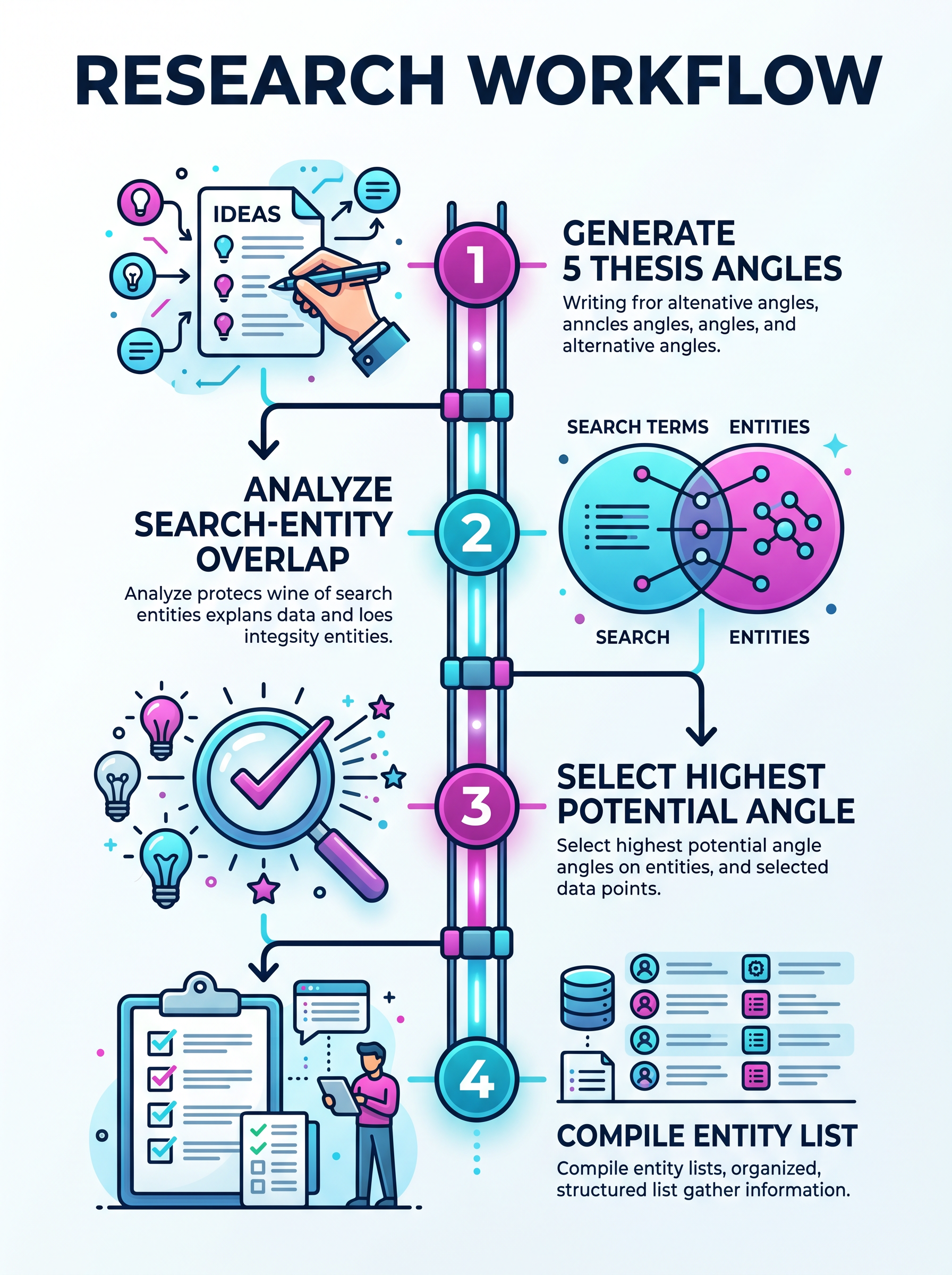
The first hour of a 2026 AI content workflow must be spent not writing, but generating multiple thesis angles and selecting the one with the highest search-entity overlap. This is the most critical quality gate in the entire process, and skipping it is the single most common reason AI-assisted content fails to rank.[1]
Automated Content Gap Analysis
Before any drafting begins, use AI research tools to perform a competitive gap analysis that goes beyond traditional keyword metrics. Tools like Semrush analyze which topics your competitors rank for that you are missing, while AI-native tools can identify specific Reddit threads or Quora discussions where AI answer engines pull data.[23] Traditional tools often miss the “micro-intents” — nuanced user needs that AI-driven SEO tools now catch.[1]
The Integrated Search Brief
A 2026 brief must align SEO, PPC, and content around three core elements:
- Target Entities: Moving beyond keywords to entities — concepts, brands, and relationships that search engines now interpret.[11]
- Search Intent Mapping: Identifying whether the query is informational, commercial, or transactional.[23]
- Competitor Scaffolding: Analyzing the top 5 ranking pages to identify “Information Gain” — unique data, expert quotes, or perspectives not already represented.[12]
Human-Led Strategic Judgment
While AI executes the research, human strategists must provide the narrative angle. AI can identify a content gap, but it cannot decide which angle differentiates your brand from the noise.[7] The angle selection step — choosing from five AI-generated thesis options the one with the highest entity overlap and Information Gain potential — is where human judgment creates competitive advantage.[9]
Frequently Asked: Why spend 45 minutes not writing?
Spending the first 45 minutes on angle generation and entity analysis prevents the most costly mistake in AI-assisted SEO: writing a well-structured article that nobody searches for. The angle with the highest search-entity overlap maximizes topical depth and ensures the draft addresses real user intent before a single sentence is generated.[1]
Key Takeaway: The first hour is dedicated to multi-angle generation, entity overlap analysis, and strategic briefing — not drafting. This pre-writing phase is the foundation that determines whether the final article will rank.
Hour 2: Guided Drafting and the Human-in-the-Loop
With a structured brief in hand, the second hour focuses on rapid drafting using specialized AI models guided section by section. The most common mistake in 2026 AI-assisted SEO is treating the AI draft as the final edit — top-ranked articles are the ones that ruthlessly cut AI-generated fluff before going live.[7]
Choosing the Right Drafting Engine
Not all AI models are suited for the same task. Professional writers in 2026 use a hybrid approach:
- Claude: Renowned for natural-sounding prose and following complex instructions without hallucinating filler phrases.[22]
- ChatGPT/GPT-4o: Best for research-heavy writing and technical explainers due to its robust browsing and data analysis features.[22]
- Jasper/Copy.ai: Ideal for enterprise teams requiring consistent brand voice across multiple contributors.[8]
The Semi-Autonomous Workflow
To maintain E-E-A-T (Experience, Expertise, Authoritativeness, and Trustworthiness), use a semi-autonomous workflow rather than a single “write a blog post” prompt.[1] Guide the AI section by section based on your structured brief:
- Introduction: Rewrite the opening by hand to ensure a personal, human connection.[22]
- Core Sections: Use AI to draft the body, ensuring it incorporates specific data points and sourced statistics.[12]
- Voice Control: Match the AI output to your brand’s unique register using style samples.[1]
Catching Hallucinations Before They Hurt Rankings
Factual accuracy is the missing piece in most automation stacks.[1] Every AI draft must pass through a quality assurance gate to catch hallucinations before they damage rankings. Tools like Perplexity or Gemini with real-time web access are essential for verifying claims and citing credible sources.[22] A single fabricated statistic can trigger E-E-A-T penalties that suppress an entire domain’s visibility.[11]
Key Takeaway: Guided, section-by-section drafting with a hybrid AI approach produces higher-quality drafts than single-prompt generation. The human edit must focus on cutting fluff, adding original insight, and verifying every factual claim.
Hour 3: Optimization, Quality Gates, and Publishing
The final hour polishes the article for both humans and machines. In 2026, content that is not structured for extraction will not be visible in AI search results.[11] This hour covers formatting for AI extraction, content scoring, and rapid indexing.
Formatting for AI Extraction (AEO)
AI systems do not just read — they extract. Use “Answer-First” architecture to win zero-click visibility:
- Direct Answer Blocks: Include a 40–60 word concise summary immediately following question-based H2 headings.[3]
- Question-Based Headings: Use H2s like “What is GEO?” to match user intent precisely.[11]
- Semantic Chunking: Write self-contained paragraphs that provide enough context for an LLM to surface them independently.[3]
Content Scoring and Technical QA
Run the draft through an optimization tool like Surfer SEO, Clearscope, or MarketMuse. These tools provide an NLP-driven score (0–100) based on entity coverage compared to top-ranking competitors.[13] Aim for a score above 75 to consistently outrank competitors.[20] Additionally, target at least 12 visual elements (images, tables, callout boxes) per 1,000 words to improve readability and retention.[6]
Technical SEO and Rapid Indexing
Speed to index is a competitive weapon in 2026. Do not wait for Google to discover your page:
- Schema Markup: Use JSON-LD schema for FAQs, articles, and author credentials to give models explicit, machine-readable context.[3]
- Rapid Indexing: Use API-based tools like Indexly to submit new URLs, getting pages indexed in hours rather than days.[20]
Frequently Asked: What NLP score should I target?
Aim for a content score of 75 or higher on tools like Surfer SEO or Clearscope. This threshold ensures your entity coverage matches or exceeds that of top-ranking competitors, which is a stronger ranking signal in 2026 than prose quality alone.[13]
Key Takeaway: The final hour is about making content machine-readable and rapidly indexable. Answer-First architecture, NLP scoring above 75, and API-based indexing are the three pillars of Hour 3.
The E-E-A-T Imperative: Why Most AI Content Fails
94% of marketers plan to use AI for content in 2026, but 81% have no measurement framework for whether that content actually produces results.[5] Most AI-generated content fails at SEO because it lacks Information Gain — the original insight that search engines now prioritize over generic, rephrased information.[1]
The Edit Ratio Threshold
Internal testing reveals a clear pattern: articles with less than 60% AI-generated content consistently rank, while articles with 95% AI-generated content fail to rank despite similar keyword targeting.[7] The “edit ratio” — the proportion of human-edited content — is the single most predictive factor for ranking success in 2026. Top-ranked articles cut at least 40% of AI-generated fluff, replacing it with original evidence, proprietary data, or firsthand experience.[12]
Pre-Publishing QA as the New Competitive Advantage
A 2026 industry report found a significant drop in organic traffic for sites publishing AI-only content without human review.[5] Senior SEOs from notable brands now spend more time on pre-publishing QA than on writing the draft itself. This shift represents a fundamental change: the bottleneck has moved from content creation to content verification.[11]
To bypass Google’s E-E-A-T penalties, every article must include:
- Original Evidence: Hand-picked examples, proprietary data, or firsthand experiences.[12]
- Third-Party Authority Signals: Mentions on respected industry sites, podcasts, or community forums like Reddit and Quora.[3]
- Author Transparency: Detailed author bios with links to credentials and social proof — “real people behind the site” is a core ranking factor in 2026.[10]
Key Takeaway: The edit ratio is the most predictive ranking factor for AI-assisted content in 2026. Articles must include at least 40% human-edited content with original evidence and verified author credentials to pass E-E-A-T gates.
Entity-Rich Language Over Human-Sounding Language
Google’s 2026 ranking signals increasingly reward topical depth over stylistic flair. This inverts the common advice to prioritize human-sounding prose from the start — instead, aim for entity-rich language first, then soften it during the human edit.[1]
Entity Density vs. Stylistic Flair
Entity density — the breadth and specificity of concepts, brands, and relationships referenced in an article — is a stronger ranking signal than prose quality in 2026.[13] Use AI to generate entity-rich drafts packed with concrete data points, named organizations, and specific technical terms. Then apply a human edit to soften tone and improve flow without losing topical depth.[11]
How to Measure Entity Overlap
Use NLP tools to compare your entity coverage against top-ranking competitors. Target an entity overlap score of 80% or higher before publishing. This means your article covers at least 80% of the entities (concepts, brands, metrics) present in the top 5 ranking pages for your target query, plus additional entities that represent Information Gain.[3]
Frequently Asked: Should I make AI content sound human first?
No. In 2026, prioritize entity-rich language in the initial draft and soften tone during editing. Google rewards topical depth over stylistic perfection, so an entity-dense article with slightly mechanical prose will outperform a beautifully written article that lacks conceptual coverage.[1]
Key Takeaway: Entity density is a stronger ranking signal than prose quality in 2026. Generate entity-rich drafts first, then apply a human edit to soften tone without sacrificing topical depth.
Multi-Angle Generation: The Critical Differentiator
Most 2026 SEO advice focuses on draft generation, not angle generation. Using AI to generate five distinct thesis angles before writing is the key differentiator between content that ranks and content that disappears.[1]
How to Generate Thesis Angles with AI
Prompt your AI tool to produce five different angles based on the same keyword cluster. For example, if targeting “AI content strategy,” generate angles around cost efficiency, quality control, competitive differentiation, workflow automation, and E-E-A-T compliance. Evaluate each angle for entity overlap, search volume, and competitive differentiation.[6]
Selecting the Winning Angle
Use a scoring matrix that weights three factors:
- Entity Density (40%): How many relevant entities does this angle naturally incorporate?[13]
- Information Gain (35%): Does this angle offer unique data or perspectives not found in top-ranking pages?[12]
- User Intent Alignment (25%): Does the angle match the dominant search intent for the target query?[23]
The winning angle should have at least 70% entity overlap with top-ranking competitors while offering a unique perspective that fills a documented content gap.[1]
Key Takeaway: Multi-angle generation is the most overlooked step in 2026 AI-assisted SEO. Generating five thesis angles and selecting the one with the highest entity overlap and Information Gain potential is what separates ranked content from filler.
The Pre-Publishing Checklist and Real-World Results
A structured, non-negotiable checklist is the core of the 3-hour workflow. This gate prevents hallucinations, fluff, and stale data from going live and is the single most effective way to enforce the edit ratio threshold.[1]
Fact-Checking and Source Verification
Verify every statistic and claim using real-time web access tools. Remove or flag any unsupported assertions before publishing. A single fabricated data point can trigger E-E-A-T penalties that suppress not just the article but the entire domain.[11]
Side-by-Side Comparison: The Edit Ratio in Action
Internal testing demonstrates the edit ratio threshold clearly:
- Article A: 60% AI-generated, 40% human edit — ranked in top 3 within 2 weeks.[7]
- Article B: 95% AI-generated, 5% human edit — failed to rank after 4 weeks.[7]
The human edit in Article A focused on cutting fluff, adding original insight, and verifying facts. Article B was published as-is with minimal changes, and despite similar keyword targeting and word count, it failed to gain traction.[12]
The Non-Negotiable Pre-Publishing Checklist
- Verify every statistic with a primary source using real-time web access
- Confirm entity overlap score of 80% or higher against top 5 competitors
- Ensure at least 40% of final content is human-edited (edit ratio check)
- Validate JSON-LD schema markup for FAQs, articles, and author credentials
- Confirm NLP content score of 75+ on Surfer SEO or equivalent tool
- Check that each H2 section has a 40-60 word direct answer block for AEO
- Submit URL for rapid indexing via API immediately after publishing
Key Takeaway: The pre-publishing checklist is the competitive advantage that most SEO teams skip. Articles with a 60% AI / 40% human edit ratio consistently outperform 95% AI-generated content, making the edit ratio the most predictive factor for ranking success in 2026.
Conclusion
The 2026 SEO Content Strategy: From AI Draft to Ranked Article in 3 Hours is not a speed hack — it is a forced constraint that improves content quality by eliminating perfectionism and enforcing a structured pre-publishing quality gate. The performance gap in 2026 is no longer between teams using AI and those not using AI; it is between teams stuck at ad hoc usage and those operating systematic content engines.[5]
Winners in 2026 will invert the common workflow: spend the first 45 minutes generating multiple thesis angles and analyzing entity overlap, use the second hour for guided section-by-section drafting with hallucination QA, and dedicate the final hour to AEO formatting, NLP scoring, and rapid indexing. The three pillars — speed, entity density, and factual accuracy — are non-negotiable.[1]
Ruthlessly cut AI-generated fluff. Aim for at least 40% human edit. Prioritize entity-rich language over stylistic flair. And implement the pre-publishing checklist as a non-negotiable gate. By following this workflow, your team can stop producing filler and start building a high-authority content ecosystem that dominates both traditional search rankings and AI-generated answer engines.[1]
Ready to scale your content operations? Explore how Autoriax can automate your SEO audits and streamline your 2026 content workflow today.[1]
Sources
- [1] Autoriax Blog — https://autoriax.com/blog/
- [3] Prismic - AI SEO 2026 — https://prismic.io/blog/ai-seo-2026
- [5] Averi.ai - State of AI Content Marketing 2026 — https://www.averi.ai/blog/the-state-of-ai-content-marketing-2026-benchmarks-report
- [6] Backlinko - Content Writing 101 — https://backlinko.com/content-writing
- [7] Spectre SEO - AI Blog Writing Tools for SEO Content 2026 — https://spectreseo.com/blog/ai-blog-writing-tools-for-seo-content-2026-review
- [8] Memeburn - Best AI Writing Tools 2026 — https://memeburn.com/best-ai-writing-tools/
- [9] Enrich Labs - AI Content Marketing Strategy — https://www.enrichlabs.ai/blog/ai-content-marketing-strategy
- [10] LinkedIn - How AI is Changing SEO 2026 — https://www.linkedin.com/pulse/how-ai-changing-seo-2026-aarav-infotech-ltwkc
- [11] Searches Everywhere - 2026 Content Strategy — https://www.searcheseverywhere.com/blog/2026-content-strategy-rank-google-ai-overviews-seo-social
- [12] Undetectable.ai - Does AI Content Rank in Google — https://undetectable.ai/blog/does-ai-content-rank-in-google/
- [13] Ventureburn - Best AI SEO Tools 2026 — https://ventureburn.com/best-ai-seo-tools/
- [20] Almcorp - Top AI SEO Tools 2026 — https://www.almcorp.com/top-ai-seo-tools-2026-guide/
- [22] How2Shout - Best AI for Writing Articles — https://www.how2shout.com/tools/best-ai-for-writing-articles.html
- [23] Semrush - AI SEO — https://www.semrush.com/blog/ai-seo/
Try Autoriax free — no credit card required
Get your first article in minutes. See the research depth before you commit.
Get 3 free articles3 articles free • No credit card • Cancel anytime