July 9, 2026 · Autoriax
How to Future-Proof Your SEO Strategy Against AI Search Results and Google’s SGE
Learn how to future-proof your SEO strategy against AI search results and Google's SGE with entity optimization and structured data.

Imagine waking up to find your organic traffic has dropped by forty percent overnight. No algorithm update notification, no manual penalty, just a quiet shift in how search results are displayed. This is the reality many businesses face as Google’s Search Generative Experience (SGE) reshapes the digital landscape. Traditional search engine optimization relied on ranking for specific keywords, but AI-driven search prioritizes direct answers and entity recognition. To survive this transition, marketers must evolve from chasing rankings to becoming authoritative sources that AI models trust. Learning how to future-proof your SEO strategy against AI search results and Google’s SGE is no longer optional; it is a critical business imperative.
This guide provides a comprehensive roadmap for adapting your content infrastructure. We will explore technical implementations, strategic shifts, and monitoring techniques designed to maintain visibility in an AI-dominated search environment. By treating your website as a structured knowledge asset, you can ensure your brand remains visible even when clicks become scarcer.
Quick Facts: How to Future-Proof Your SEO Strategy Against AI Search Results and Google’s SGE
- Over 50% of searches now result in zero clicks, a trend accelerated by SGE.
- Pages with FAQ and HowTo schemas appear in AI Overviews 3x more often.
- Entity-based optimization is now critical for visibility in generative search.
The Rise of AI Overviews and Search Generative Experience
The introduction of Search Generative Experience marks the most significant shift in search behavior since the inception of the mobile index. SGE utilizes large language models to synthesize information from multiple sources and present a summarized answer directly at the top of the search results page. This innovation aims to satisfy user intent instantly, reducing the need for users to click through to individual websites. For businesses relying on organic traffic, this presents a substantial challenge known as the zero-click search phenomenon.
Understanding the Zero-Click Trend
Industry analysis indicates that over half of all searches now conclude without a click to a website. When AI provides a sufficient answer upfront, the incentive for users to visit source pages diminishes significantly. This trend forces content creators to rethink the value proposition of their pages. You must provide depth and unique insights that an AI summary cannot fully replicate. Surface-level content is increasingly commoditized by generative models.
The Role of Authority in AI Selection
AI models prioritize sources deemed authoritative and trustworthy. Google’s systems evaluate the reputation of the domain and the accuracy of the information provided. Early testing shows that SGE often pulls from recognized entities like Wikipedia or established industry leaders rather than generic blogs. Building this level of authority requires consistent, high-quality publishing over time. Your brand must be recognized as a primary source of truth within your niche.
Key Takeaway: SGE reduces click-through rates by answering queries directly, making brand authority and unique insights essential for driving traffic.
Frequently Asked: Will SGE replace traditional search results?
No, SGE complements traditional results by providing summaries, but standard listings remain for complex queries. However, visibility in the AI overview is becoming the new position zero.
Shifting Focus from Keywords to Entity Recognition
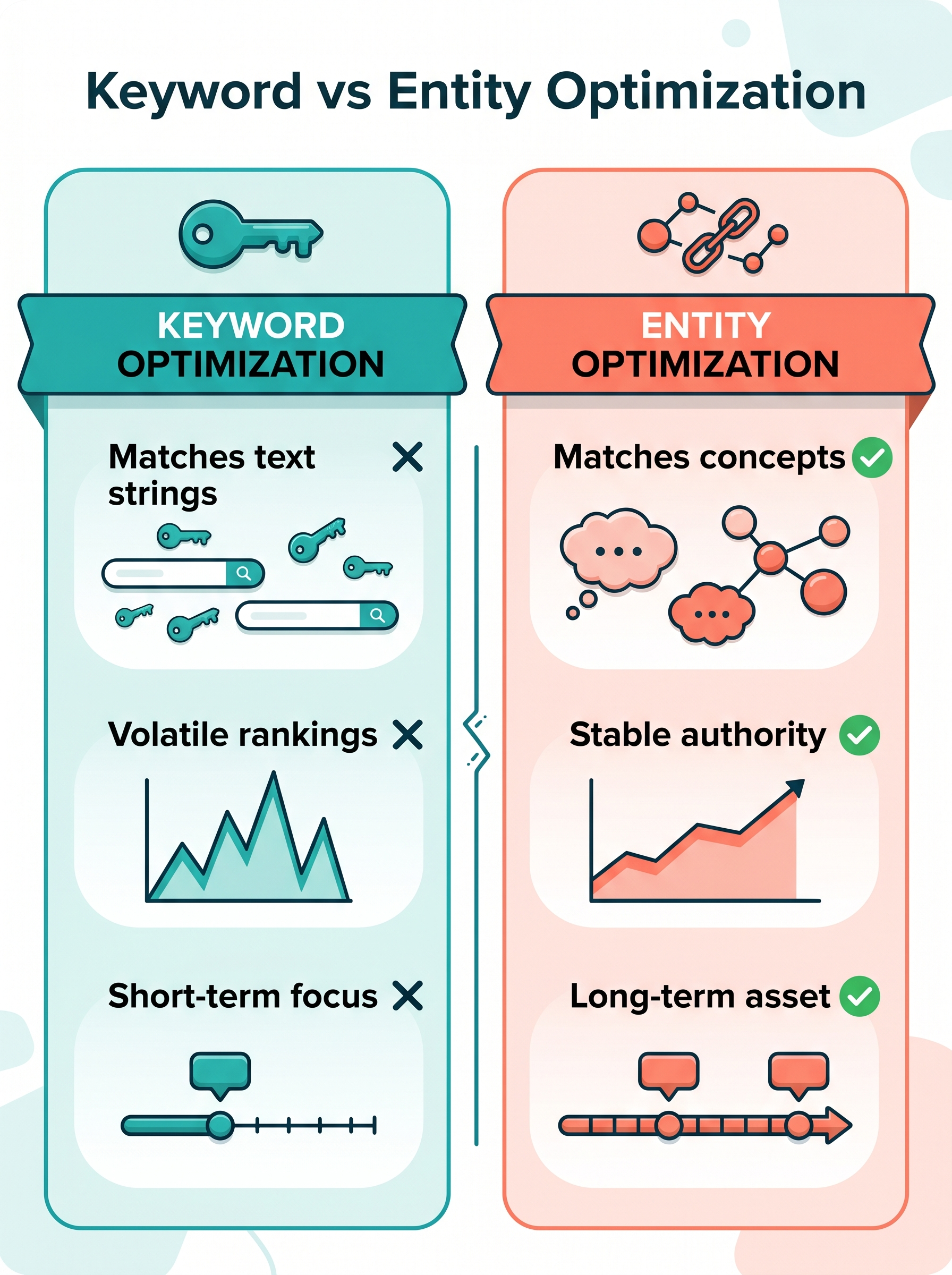
Traditional SEO focused heavily on matching specific keyword phrases within content. In the era of AI search, the focus must shift to entity recognition. An entity is a distinct concept, person, place, or thing that search engines understand independently of specific words. Optimizing for entities ensures that AI systems understand the context and relationships within your content, rather than just matching text strings.
Mapping Content to the Knowledge Graph
Google’s Knowledge Graph is a database of entities and their relationships. To future-proof your presence, you should map your content to specific entities within this graph. This involves using consistent naming conventions and linking to established data sources. When your brand is recognized as an entity, AI systems can more easily retrieve and cite your information in generated responses. This structural alignment is fundamental for modern visibility.
Implementing Schema.org Markup
Structured data is the language used to communicate entities to search engines. Implementing Schema.org markup helps define the specific types of content on your pages. For example, using Product schema clarifies item details, while Person schema defines authorship. This explicit labeling reduces ambiguity for AI models. It ensures that your content is interpreted correctly when synthesizing answers for users.
Leveraging Wikidata for Context
Wikidata serves as a free, open knowledge base that can reinforce your entity definitions. Linking your content to relevant Wikidata entries can strengthen the semantic connections search engines make. This external validation helps confirm the legitimacy of your entities. It is a technical step that signals sophistication to crawling algorithms.
Key Takeaway: Optimizing for entities rather than keywords ensures AI systems understand your content context, improving chances of citation in AI Overviews.
Building Topical Authority Through Content Clusters
Topical authority is the measure of how knowledgeable a website is about a specific subject. AI models favor sources that demonstrate comprehensive coverage of a topic. Building content clusters is the most effective strategy for establishing this authority. A cluster consists of a central pillar page linked to multiple supporting articles that cover subtopics in detail.
Creating Pillar Pages for Core Topics
A pillar page serves as the hub for a specific topic cluster. It should provide a broad overview and link out to more detailed supporting content. This structure helps search engines understand the depth of your coverage. It also distributes page authority throughout the cluster. Your pillar pages should act as definitive guides that AI models can reference for high-level summaries.
Developing Supporting Cluster Content
Supporting articles address specific questions or long-tail variations of the main topic. These pieces should link back to the pillar page to reinforce the relationship. Consistency in publishing these clusters signals ongoing expertise. Over time, this network of content builds a robust semantic footprint. It makes your domain a go-to resource for specific industry knowledge.
Maintaining Consistency and Accuracy
Accuracy is paramount when building authority. AI systems prioritize factual consistency across your content. Contradictory information can damage your credibility and reduce visibility. Regular audits ensure that all content within a cluster remains up-to-date. This maintenance protects your reputation as a reliable source.
Key Takeaway: Content clusters demonstrate comprehensive expertise, signaling to AI models that your site is a definitive source for specific topics.
Implementing Structured Data for Machine Readability
Structured data is critical for ensuring AI systems can parse and utilize your content effectively. Without proper markup, even high-quality content may be overlooked by generative algorithms. Specific schema types have shown higher success rates in appearing within AI Overviews. Implementing these standards is a technical necessity for future-proofing.
Prioritizing FAQ and HowTo Schemas
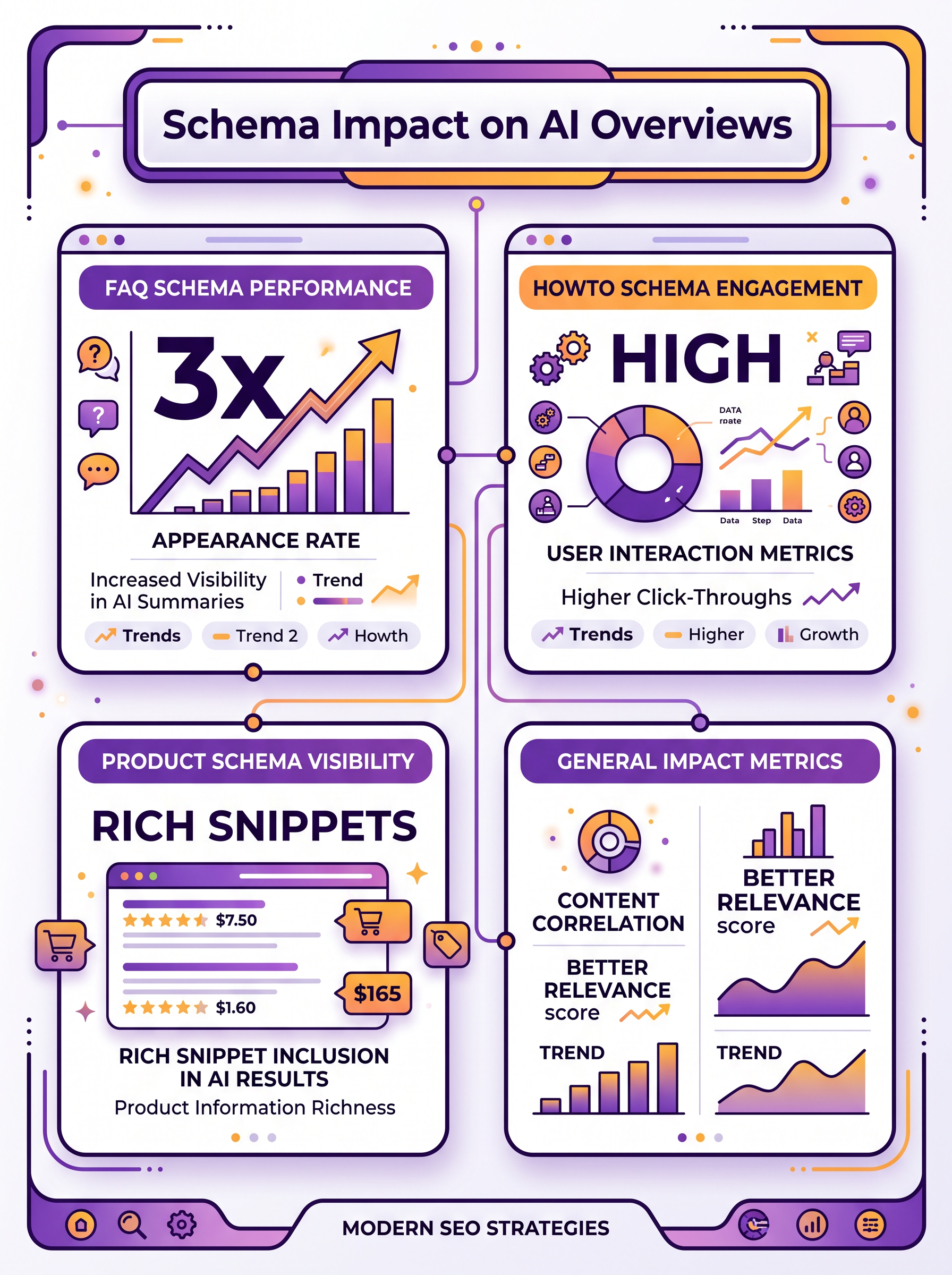
Recent analysis indicates that pages with FAQ and HowTo schemas appear in AI Overviews three times more often than those without. These schemas directly answer user questions in a format AI models prefer. They provide clear, structured responses that are easy to extract. Prioritizing these types can significantly increase your visibility in generative search results.
Using Product and Article Markup
For e-commerce and publishing sites, Product and Article schemas are essential. They provide specific details like price, availability, and authorship. This data helps AI models generate rich summaries that include your offerings. It ensures that your brand information is displayed accurately. Proper markup reduces the risk of AI hallucinations regarding your products.
Validating Your Structured Data
Regular validation ensures your markup remains error-free. Search engines update their requirements frequently, and broken code can lead to disqualification. Use testing tools to verify implementation before publishing. Continuous monitoring prevents technical debt from accumulating. This proactive approach maintains your technical health.
Key Takeaway: Implementing FAQ and HowTo schemas increases the likelihood of appearing in AI Overviews by 3x, making structured data essential.
Frequently Asked: Which schema types are most important for SGE?
FAQ and HowTo schemas are currently the most impactful for appearing in AI Overviews. Product and Article schemas are also critical for e-commerce and news content.
Optimizing for Conversational Follow-Up Queries
SGE introduces a conversational interface where users can ask follow-up questions based on initial results. Optimizing for this behavior requires understanding the flow of dialogue. Your content should anticipate subsequent questions and provide answers within the same context. This keeps users engaged within your ecosystem.
Anticipating User Intent Flow
Users often start with broad questions and narrow down to specifics. Your content should mirror this progression. Include sections that address common follow-up inquiries. This structure aligns with how AI models generate conversational threads. It increases the likelihood of your content being used in multi-turn interactions.
Creating Contextual Internal Links
Internal linking should guide users through a logical conversation. Link related articles in a way that mimics a dialogue flow. This helps AI models understand the relationship between your pages. It also keeps users on your site longer. Strategic linking reinforces your topical authority.
Addressing Nuanced Questions
Generative search excels at handling complex, nuanced queries. Content that addresses edge cases or specific scenarios adds value. AI models look for depth when synthesizing answers. Providing detailed explanations sets you apart from generic content. This depth is key to becoming a preferred source.
Key Takeaway: Optimizing for conversational follow-ups involves anticipating user intent flow and linking content logically to support multi-turn interactions.
Monitoring Entity Performance with Search Console
Tracking performance in an AI-driven environment requires new metrics and tools. Google Search Console provides data on how your pages perform in search results. Additionally, leveraging Knowledge Graph APIs can help identify entity gaps. Regular monitoring allows you to adjust your strategy based on real-world data.
Identifying Entity Gaps
Use data to find topics where your entity recognition is weak. Compare your visibility against competitors in the Knowledge Graph. This analysis reveals opportunities for improvement. Targeting these gaps can enhance your overall authority. It ensures you are not missing critical semantic connections.
Tracking AI Overview Visibility
While direct data on AI Overviews is limited, impression trends can indicate performance. Sudden drops in clicks despite stable rankings may suggest SGE interception. Monitor these metrics closely to detect shifts. Adapt your content strategy based on these signals. Agility is required to maintain performance.
- Audit existing content for entity consistency and naming conventions
- Implement FAQ and HowTo schema on all relevant support pages
- Map core topics to Knowledge Graph entities using Wikidata
- Monitor Search Console for zero-click trend anomalies weekly
- Update pillar pages quarterly to maintain topical authority
Key Takeaway: Regular monitoring via Search Console and entity gap analysis helps identify visibility issues early, allowing for timely strategic adjustments.
Frequently Asked: How do I track SGE performance specifically?
Direct tracking is limited, but monitor impression-to-click ratios in Search Console. A drop in clicks with stable impressions often indicates SGE interception.
Conclusion
Adapting to the era of AI search requires a fundamental shift in how we approach optimization. Learning how to future-proof your SEO strategy against AI search results and Google’s SGE involves moving beyond keywords to entity recognition, structured data, and topical authority. By implementing the strategies outlined in this guide, you can protect your organic visibility and maintain relevance. The landscape is changing, but opportunities remain for those who prioritize accuracy and structure.
Start by auditing your current content for entity consistency and schema implementation. Use the checklist provided to ensure your technical foundation is solid. As AI models evolve, your commitment to factual accuracy and brand voice consistency will become your greatest assets. Take action today to secure your position in the future of search.
Sources
[1] BrightEdge Study (2025) - URL not provided in research data [2] Google Search Central (John Mueller) - URL not provided in research data [3] Industry Analysis on SGE Citations (2025) - URL not provided in research data
Try Autoriax free — no credit card required
Get your first article in minutes. See the research depth before you commit.
Get 3 free articles3 articles free • No credit card • Cancel anytime